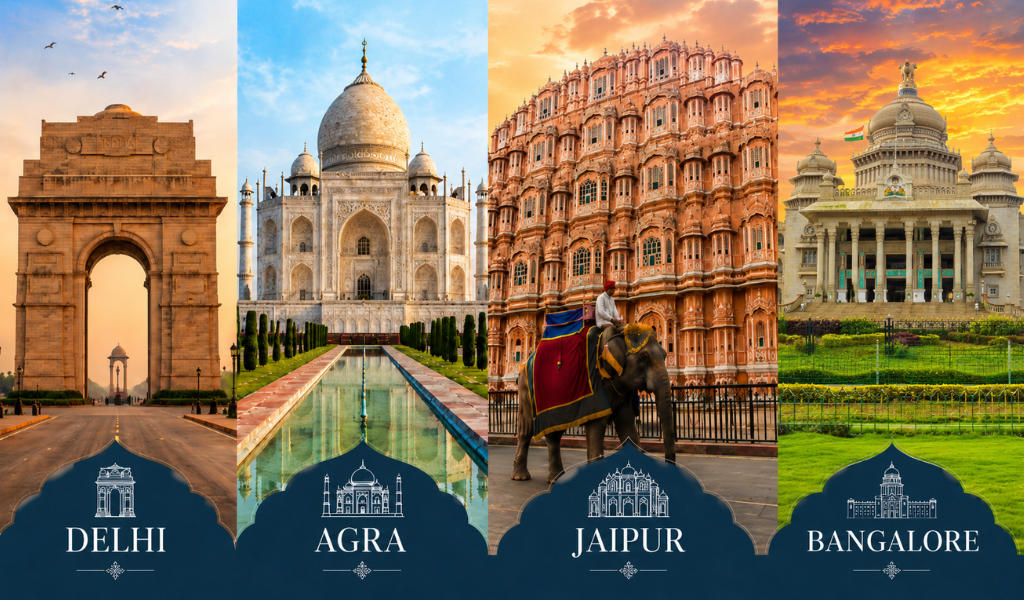
Find the best customizable tour packages to the top destinations across India.
Call Support

+91 9759222888

Mail Support

info@indiaeasytrip.com

English
English
ंद
Chardham Tour Package From Delhi

Location Not Specified View Location

Darshan & Aarti

Motorable Route

Tapt Kund

Mana Village

Price on Request

Ask for Price

Why Book Your Chardham yatra From Delhi With India Easy Trip?

31 Years Experience: Guiding travelers since 1995.

Government Approved: Uttarakhand’s first registered travel company, fully approved by Ministry of Tourism.

4.5-Star Rated: Proudly rated 4.5-stars on TripAdvisor

Safety First: We follow strict DGCA & UCADA guidelines for all mountain and helicopter services.

On-Ground Support: Local staff present 24/7 to handle weather, transport, and your needs.

Certified Quality: ISO certified with 20+ government approvals for a trusted trekking experience.

Chardham Tour Package From Delhi

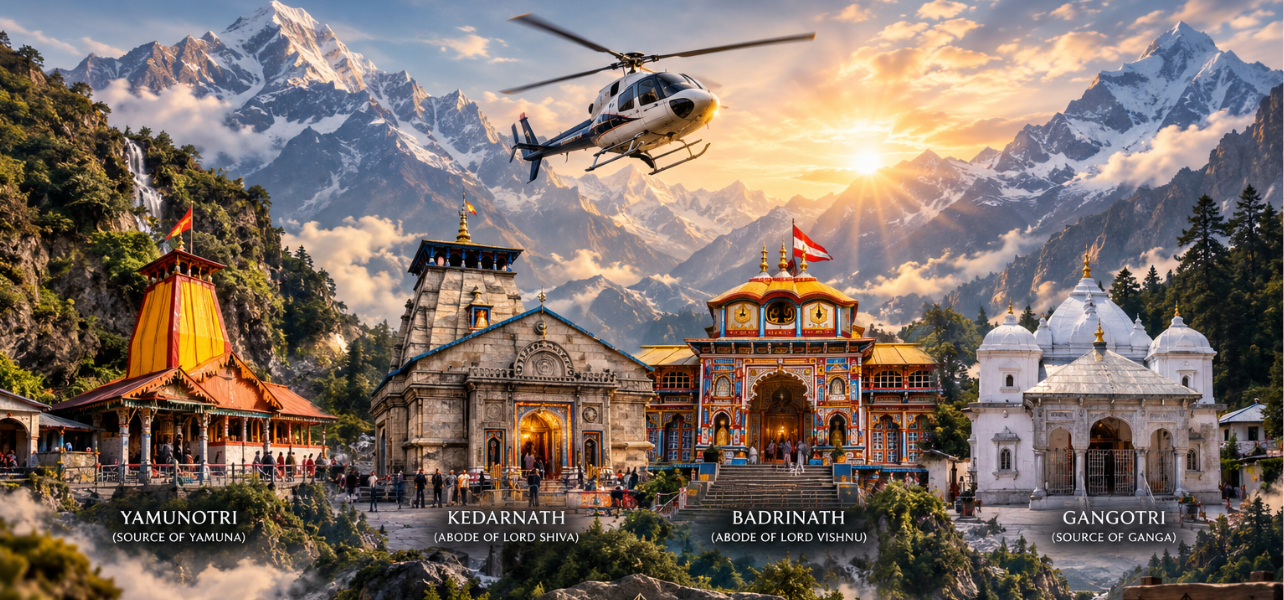
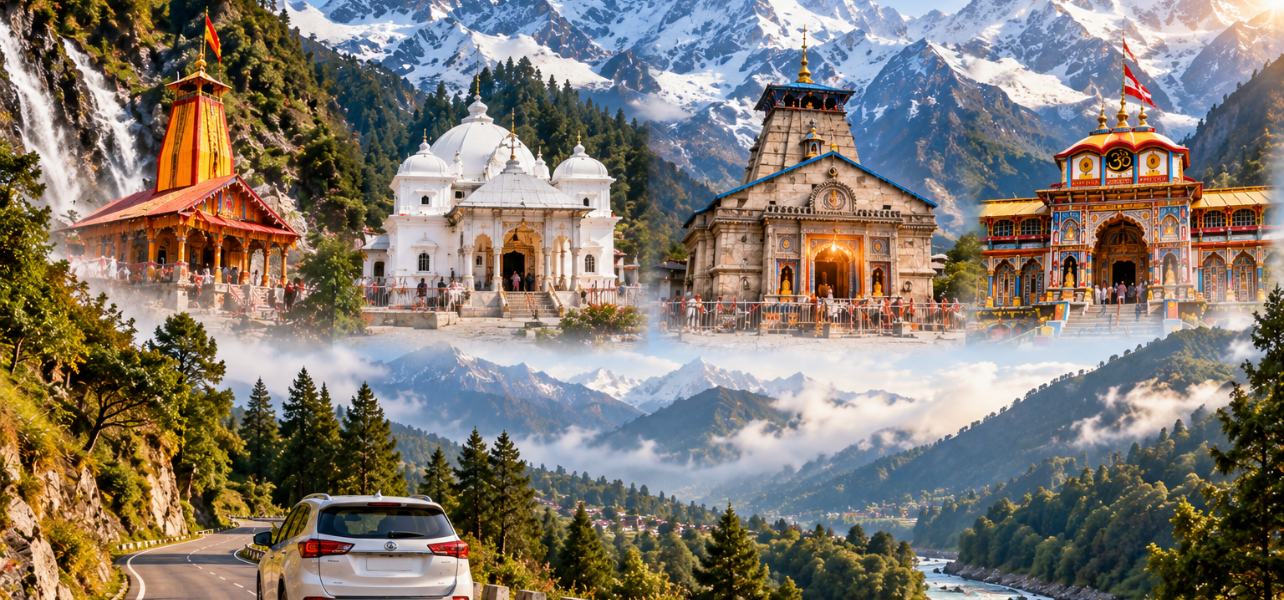
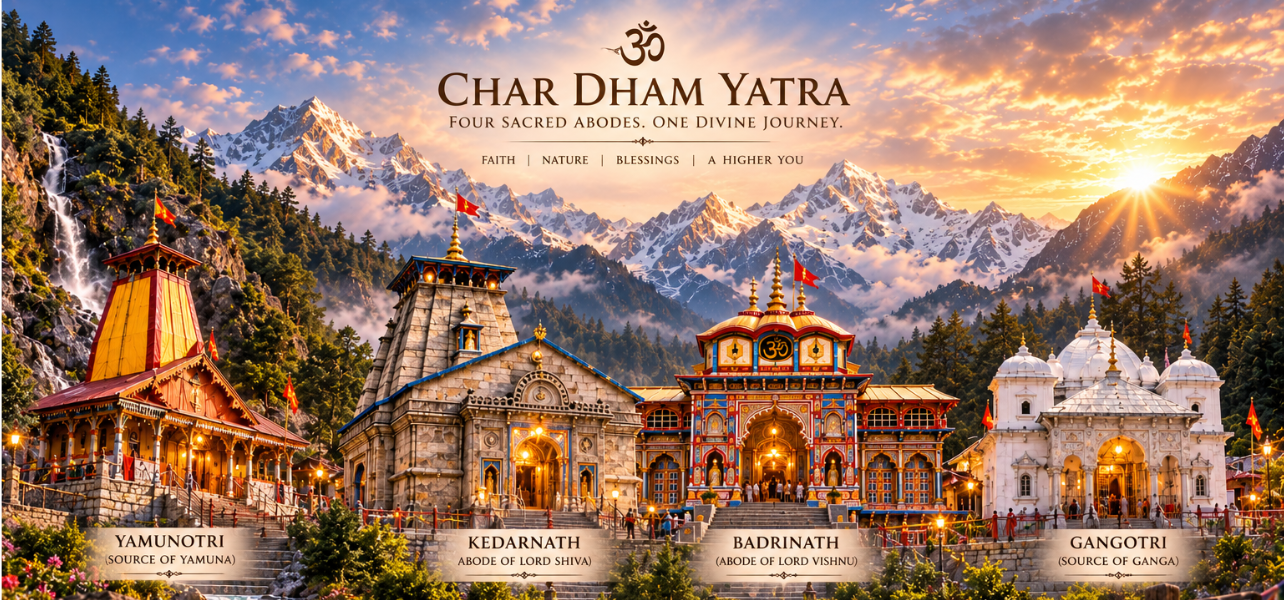
Get the complete Chardham Yatra tour package from Delhi with the best deal, offered by India Easy Trip Pvt Ltd. The Char Dham Package from Delhi is a 12-day tour package for four sacred temples in Uttarakhand. Many devotees travel by air for the Chardham Helicopter available from Dehradun helipad and they cover this journey by helicopter in 5 days from Dehradun to Dehradun.

Char Dham Yatra Tour 12 Days Itinerary From Delhi

Day 01: Delhi to Haridwar Day 02: Haridwar to Barkot Day 03: Barkot to Syanachatti to Yamunotri to Syanachatti to Barkot Day 04: Barkot to Uttarkashi Day 05: Uttarkashi to Gangotri to Uttarkashi Day 06: Uttarkashi to Guptkashi Day 07: Guptkashi to Gaurikund to Kedarnath Day08: Kedarnath to Gaurikund to Guptkashi Day 09: Guptkashi to Chopta to Badrinath Day 10: Badrinath to Joshimath to Auli to Joshimath to Rudraprayag Day 11: Rudraprayag to Devoprayag to Rishikesh Day 12: Rishikesh to Delhi/Delhi Airport.

Day 01

Delhi Haridwar (220kms/6-7 hrs drive one way) Height: 310 MTS

Meet our driver/ representative at Delhi airport /station/hotel/home and drive to Haridwar. Check into the hotel arrival in Haridwar. Evening visit Mansa Devi Temple, enjoy a bath in Ganga River & Ganga Aarti at Har Ki Pauri. Overnight stay at Haridwar.
Haridwar: The holy city of Haridwar translates to "Gateway to God," and the breathtaking city, replete with temples, is a magnet for religious pilgrims from all over the globe. Religious festivals hold even further draw, and tourists can’t help but be compelled by the city’s aura of intense spirituality. Haridwar is one of the seven holiest places of the Hindus, located on the banks of the River Ganges. The sheer numbers of people gathering around Har-ki-PairiGhat give Haridwar a chaotic but reverent feel.

Day 02

Haridwar Barkot (210kms/7-8hrs drive one way) Height: 1352 MTS

The morning after breakfast at your hotel & drive for Barkot via Mussoorie, Enroute visit Mussoorie Lake & Kempty Falls in Mussoorie. Later drive straight to Barkot. Check in to your pre-book hotel in Barkot. Overnight stay at Barkot.

Mussoorie:-The name Mussoorie is often attributed to a derivation of MansÅ«r, a shrub that is indigenous to the area. The town is often referred to as Mansuri by most Indians. In 1803 the Gorkhas under Umer Singh Thapa conquered the Garhwal and the Dehra, whereby Mussoorie was established. On 1 November 1814, a war broke out between the Gorkhas and the British. Mussoorie was evacuated by the Gorkhas by the year 1815 and was annexed to the district of Saharanpur by 1819. 
For More Information click on Mussoorie Tourism
Barkot Weather - Generally pleasant in summer, the temp ranges from 25-30 degree Celsius, 
Winter: The Days are pleasantly cool but the nights are cold, temp ranges from 10 deg to 05 deg.

Day 03

Barkot / Yamunotri / Barkot {36kms drive & 6kms Trek (one side)} Height: 3235 MTS

Early morning, drive to Jankichatti / Phoolchatti & have your breakfast one the way. Later start your trek from Jankichatti  to Yamunotri (6kms) (Either by walk or by horse or by Doli at own cost). After taking bath in Jamunabai Kund's warm water and having "Darshan" of "Yamuna ji" return to Jankichatti by trek / pony /Doli. Later drive towards Barkot. Stay overnight at Barkot.

Yamunotri Temple: Maharani Gularia of Jaipur built the temple in the 19th Century. It was destroyed twice in the present century and rebuilt again. At Yamunotri, One can cook rice by packing it in a cloth and dipping it in the hot water of the Taptkund. Pilgrims take this cooked rice home as "Prasad". Here near the temple "Pooja" can be offered to Divya Shila.

Surya Kund: There are a Number of thermal springs near temple, which flows into numerous pools. The most important of these is Surya Kund.

Divya Shila: A rock pillar, worshipped before entering the Yamunotri Temple.

Yamunotri Weather- In summer the maximum temp is 18 degrees and the minimum is - 10 degrees Celsius. The days are pleasantly cool but the nights are cold.

Day 04

Barkot Uttarkashi (100kms/4hrs drive one way) Height: 1352 MTS

The morning after breakfast, drive to Uttarkashi. Visit Shivgufa an old cave dedicated to Lord Shiva on the way to Uttarkashi. Arrival in Uttarkashi visit Kashi Vishwanath Temple an 5000 years old temple dedicated to Shiva in Uttarkashi city, after that check in to the hotel, day free for rest. Overnight stay at Uttarkashi.

Uttarkashi is home to a number of ashrams, temples. The name of the town reflects its similarity too and location (as north of) the city of Kashi (Varanasi). Similar to Varanasi, town of Uttarkashi is also situated on the banks of River Ganga.

Uttarkashi Weather - Generally hot in summer, the temperature ranges from 30-35 degree Celsius but nights is pleasant, Cold in winters.

Day 05

Uttarkashi Gangotri Uttarkashi (100kms/3-4 hrs each side) Height: 3048 MTS

Early morning drive to Gangotri, en route enjoy breakfast in Gangnani. Take a holy dip in Gangnani Garam Kund (Hot water spring), further drive to Gangotri via beautiful Harsil Valley. Harsil is famous for its natural beauty and for the majestic views of the Deodar trees, Mountains and Apple garden. On arrival at Shree Gangotri, take a holy dip in the sacred river Ganges which is also called Bhagirathi at its origin. Perform Pooja and Darshan, after that relax for some time in the lovely surroundings. Later drive back to Uttarkashi. Overnight stay at Uttarkashi.

Harsil:-  Harsil, also known as the Mini Switzerland of India, Harsil  is a village, located on the banks of the Bhagirathi River, on the way to Gangotri, a Hindu pilgrimage site in Uttarkashi district of the Indian state of Uttarakhand. 

Ganges below Gangotri, near Harsil Situated at an altitude of 9,005 ft (2,745 meters) from sea level, Harsil lies 78 km from Uttarkashi, and 30 km away from the Gangotri National Park which is spread across 1,553 square km. The hill station is well- known for its natural environment and apple production.

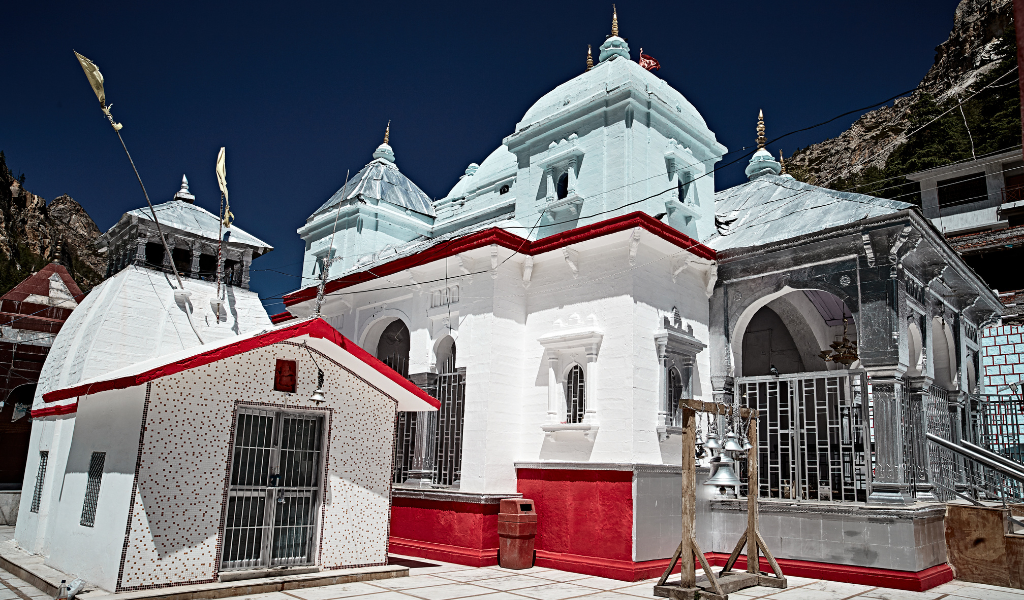
Gangotri Temple: The temple was constructed by the Gorkha General Amar Singh Thapa in the 18th Century, is situated on the right bank of Bhagirathi.  

Gangotri Weather - The maximum temperature during summer can go up to 20° Celsius. Summer nights can get cooler with a minimum temperature of 10° Celsius. Light woolen clothes are required while visiting Gangotri during summer. Winter season is very cold in Gangotri. Gangotri will be covered in sheets of snow during winter. Pilgrimage centers remains closed throughout winter due to heavy snowfalls.

Day 06

Uttarkashi Guptkashi (220kms/8-9hrs drive one way) Height: 1319 MTS

Morning after breakfast, drive to Guptkashi via Moolgarh & Lambgaon. On the way you can see the beautiful river Mandakini at Tilwara. The Mandakini River originated from Kedarnath, drive alongside the river to reach Guptakashi, visit Ardh Narishwar Temple in Guptakashi. Check into the hotel arrival in Guptakashi. Overnight stay at Guptakashi.

Guptakashi:-The name GuptKashi means "Hidden Kashi”. Mythology describes how when the Pandava brothers were searching for a glimpse of Shiva, Shivji first concealed himself at Guptkashi, but later fled from them further up the valley to Kedarnath, where the Pandavas finally got their wish fulfilled. There are more tangible connections as well-the Kedarnath pandas (priests) live in Guptkashi during the winter months, and after the Kedarnath temple closes for the winter, the image of Kedarnath passes through GuptKashi on its way to Ukhimath (across the valley), where it stays for the winter.

Guptkashi Weather - pleasant in summer, the temperature ranges from 25-30 degrees Celsius. Cold in winters.

Day 07

Guptkashi /Sonprayag / Kedarnath

Early morning (04:00 AM), drive for Sonprayag for trekking of Kedarnath. You can go by helicopter also. Reach Kedarnath in the evening by trek & have darshan in the temple. Evening enjoys Aarti at temple. Overnight stay at Kedarnath.
By Helicopter: Morning our driver will transfer you to your pre-book Helipad. After coming back to helipad our car will drop you at Hotel for rest. 

By Trek: Morning our driver will drop you at Sonprayag then you have to take local jeep for Gaurikund& then your trek will start for Kedarnath ji. After darshan you follow same & back to Sonprayag. There is a big parking issue so driver will park the vehicle at  other place if his contact no. is not working then you have to arrange other taxi or wait for your driver & send the message any other.

Day 08

Kedarnath / / Guptkashi

Morning visits Kedarnath Temple for pooja and after breakfast, check out from the hotel. Overnight stay in Guptkashi.
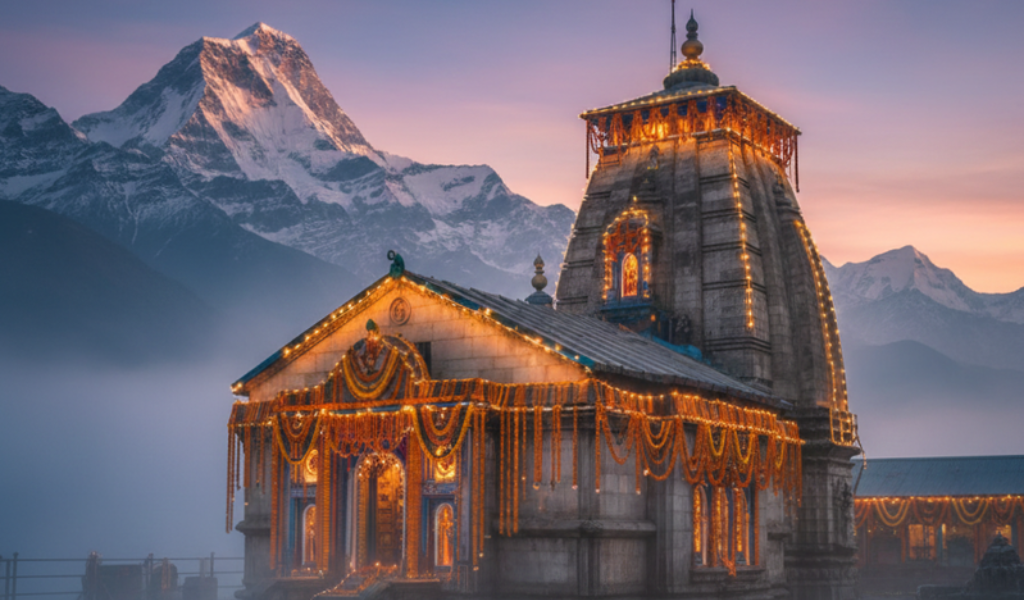
Kedarnath: The Kedarnath shrine, one of the 12 Jyotirlingas of Lord Shiva, is a scenic spot situated, against the backdrop of the majestic Kedarnath range. Kedar is another name of Lord Shiva. According to legend, the Pandavas after having won over the Kaurava in the Kurukshetra war felt guilty of having killed their own brothers and sought the blessings of Lord Shiva for redemption. He eluded them repeatedly and while fleeing took refuge at Kedarnath in the form of a bull. On being followed he dived into the ground, leaving his hump on the surface. The remaining portions of Lord Shiva appeared at four other places and are worshipped there as his manifestations. The arms appeared at Tungnath, the face at Rudranath, the belly at Madhmaheshwar and his locks (hair) with head at Kalpeshwar. Kedarnath and the four above-mentioned shrines are treated as Panch Kedar.

Kedarnath Weather - Due to its high altitude the weather in Kedarnath remains cold for most part of the year. Summer here is cool and pleasant while winter is severe. During summer season the temperature varies around 20°Celsius. Light woolen wear is recommended. Winter season in Kedarnath is severe with mercury falling to as low as 0°Celsius. During this time the place experiences snowfall as well. Due to the extreme climatic conditions, this time is usually avoided by tourists. 

Day 09

Guptkashi Badrinath (220kms/9-10hrs drive one way) Height: 3133 MTS

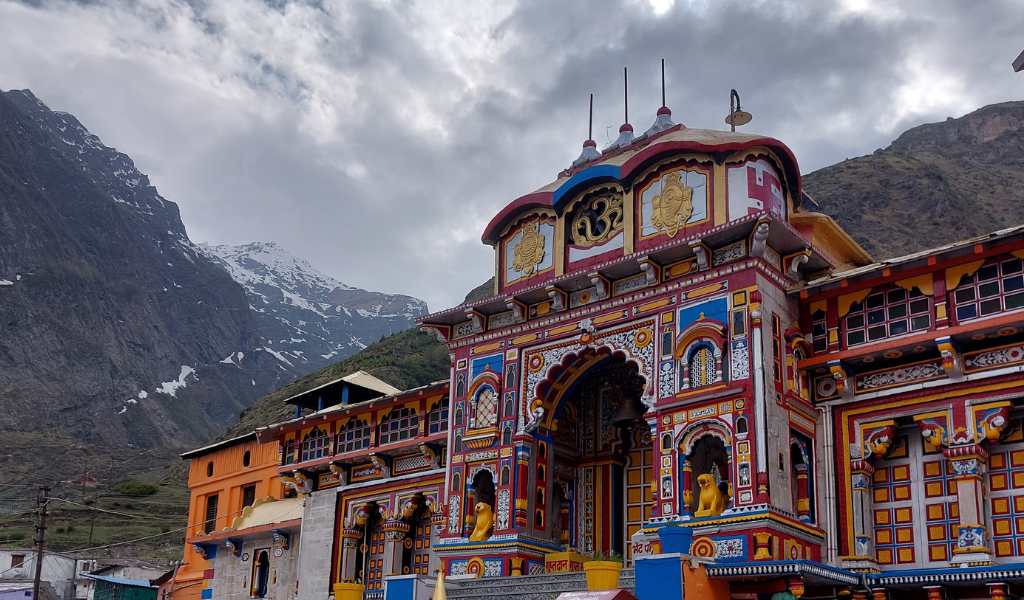
The morning after breakfast, drive to Badrinath. Check in to the hotel arrival in Badrinath. Pilgrims after having a bath in the Tapt Kund have the Darshan of Badrivishal & Aarti in the evening. Brahamakapal is significant for Pinddan Shraddh of ancestors (Pitrus). There is another interesting sightseeing spot like Mana, Vyas Gufa, Maatamoorti, Charanpaduka, Bhim Kund, and the "Mukh" of the Saraswati River. Just within the 3 km. of Badrinath ji. Overnight stay at Badrinath.

Badrinath Ji is one of the 'Ancient Four Dhams' and one of the most celebrated pilgrimage spots of the country and is situated at an elevation of 3,133 meters, guarded on either side by the two mountain ranges known as Nar & Narayan with the towering Neelkanth Peak providing a splendid backdrop. This revered spot was once carpeted with wild berries. Thus the place got the name "Badri van", meaning "forest of berries".

Tapt Kund: Natural thermal springs on the bank of the river Alaknanda, where it is customary to bathe before entering the Badrinath temple. 

Mana Village: Inhabited by an Indo-Mongolian tribe, it is the last Indian village before Tibet.

Vasudhara: As the name suggests, Vasundhara is a magnificent waterfall. This place is 5 km from Badrinath out of which 2 km is motorable up to Mana. 

BhimPul : On the other side of Mana village, a massive rock forming a natural bridge, lies over the roaring Saraswati river. It presents a spectacular view of water thundering down through the narrow passage under the rock and is believed to have been placed there by Bhim, the second eldest among the five Pandava brothers.

Vyas Gufa (cave): Near Mana Village, this is a rock cave where Ved Vyas is believed to have composed the Mahabharata and the Pauranic commentaries.

Badrinath Weather: The average maximum temperature will be around 18° Celsius and the average minimum is 8° Celsius. Warm and woolen clothes are hence required for a stay in Badrinath throughout the year. Winter in Badrinath is often accompanied by snowfalls. Winter is very chilly with an average temperature of 5° Celsius. Due to the extreme climatic conditions, this time is usually closed for tourists.

Day 10

Badrinath Joshimath Rudraprayag (160kms/7hrs drive one way) Height: 895 MTS

The morning after breakfast, a driver for Rudraprayag via Joshimath. Visit on the way Narsingh Temple in Joshimath later drive back to Rudraprayag via Joshimath. Check into the hotel arrival in Rudraprayag. Overnight stay at Rudraprayag.

Joshimath is situated on the slopes above the confluence of the rivers Alaknanda and Dhauliganga. Of the four 'Maths' established by Adi Shankaracharya, Joshimath is the winter seat of Badrinath. The idol is brought down to Joshimath and installed in the temple for people to worship. There are many other temples in the township. The most important is the temple of NarSingh with the idol of Lord Vishnu. The left arm of this deity is getting destroyed with time and the popular belief holds that the day the arm completely withers Badrinath valley will cease to exist and the Gods will transfer the residence into the neighboring Niti Valley at BhavishyaBadri.

Rudraprayag is one of the PanchPrayag (five confluences) of Alaknanda River. It is confluence of rivers Alaknanda and Mandakini. Kedarnath, a Hindu holy town is located 86 km from Rudraprayag.

Rudraprayag Weather - Generally hot in summer, the temperature ranges from 35-40 degrees Celsius. 
Winter: The Days are pleasantly cool but the nights are cold, temp ranges from 20 deg to 05 deg.

Day 11

Rudraprayag Rishikesh (140kms/5-6hrs drive one way)

The morning after breakfast, drive for Rishikesh. Rishikesh 'place of sages' is celebrated as a spiritual town on the bank of Ganga and is surrounded by the Shivalik range of the Himalayas on three sides. It is said that when Raibhya Rishi did hard penances, God appeared by the name of " Hrishikesh " and this area hence firth came to be known as Rishikesh. Later visit Rishikesh Temples Sight Seeing – Laxman Jhulla, Ram Jhulla. Overnight stay at Rishikesh.

Rishikesh: Named after Lord Vishnu, Rishikesh is a holy city for Hindus. Located in the foothills of the Himalayas in northern India it is also known as the yoga center of the world and is home to many world-renowned ashrams. Rishikesh styles itself as the ‘Yoga Capital of the World’, with masses of ashrams and all kinds of yoga and meditation classes. The fast-flowing Ganges is surrounded by forested hills inside the city. Apart from temples and ashrams, Rishikesh is now a popular white-water rafting center, backpacker hang-out, and gateway to treks in the Himalayas.

Day 12

Rishikesh Delhi (245kms/ 6-7hrs. Drive one way)

The morning after breakfast, check out from the hotel & drive for Delhi. Dropping at Delhi airport/ station/ home/ hotel.

Char Dham Yatra Essential Travel Checklist

A quick, checklist for your Chardham Yatra from Delhi to the Himalayas.

1. Clothing & Layering

  • Warm Base Layers: 2–3 pairs of heavy thermals.

  • Warmers: Fleece jacket or lightweight sweater.

  • Heavy Outer Layer: 1 heavy windproof & waterproof jacket.

  • Rain Protection: Quality raincoat or sturdy poncho.

  • Head & Hands: Woollen cap, neck warmer, and thermal gloves.

  • Trek Wear: Quick-dry pants and full-sleeve t-shirts.

2. Footwear & Socks

  • Trekking Shoes: Sturdy, waterproof, non-slip shoes (break them in 2–3 weeks before leaving Delhi).

  • Extra Pair: Slippers or floaters for hotel stays.

  • Socks: 4–5 pairs of thick woollen and moisture-wicking socks.

3. Medical Kit

  • Motion & Altitude Sickness: Tablets/bands for winding roads and altitude care (portable oxygen cylinders are available at base camps).

  • First Aid & Essentials: Antiseptic, crepe bandage, pain relief spray, band-aids, cold/fever tablets.

  • Daily Prescriptions: Adequate supply of regular medications (BP, diabetes, etc.).

4. Documents & Passes

  • Photo ID: Government ID (Voter ID, Passport, Driver's License, or National ID/Aadhaar) — original & copies.

  • Yatra Registration: Printed copies of your official Uttarakhand Tourism Yatra Pass/QR Code.

  • Contacts & Photos: Printed emergency contact list and 4–6 passport-size photos.

5. Travel Gear & Electronics

  • Power Bank: High-capacity power bank (20,000+ mAh).

  • Torch & Cash: Small LED flashlight/headlamp and sufficient cash in small notes (₹50, ₹100, ₹500).

  • Sun & Skin Care: Sunscreen (SPF 50+), lip balm, UV sunglasses, and an insulated water bottle for warm water.

Altitude Fitness Guide For Chardham Yatra From Delhi

1. Fitness & Acclimatization

  • Pre-Trip Prep (Start 3–4 Weeks Early):

    • Daily Walk: 3–5 km brisk walking in your trekking shoes.

    • Breathing Exercises: 15–20 mins of Pranayama (Anulom Vilom) to improve oxygen intake.

    • Stair Climbing: Light practice for thigh and knee strength.

  • On-Trek Tips:

    • Walk slowly and at a steady pace; avoid sudden exertion.

    • Drink warm water, ORS, or herbal tea frequently.

    • Eat light, carbohydrate-rich vegetarian meals in small portions.

2. Health Checks & AMS Care

  • Delhi Fitness Screening: Get a pre-trip checkup (BP, ECG, Blood Sugar, Pulmonary) before leaving home.

  • En-Route Checkpoints: Government booths at Sonprayag, Gaurikund, and Jankichatti monitor blood pressure and SpO2 levels before allowing ascent.

  • AMS Management:

    • Signs: Persistent headache, nausea, dizziness, or shortness of breath.

    • Action: Rest immediately, use portable oxygen cans (available at base camps), or visit trail medical posts (every 1–2 km).

    • Descend: Go to a lower elevation immediately if symptoms worsen.

3. Trek Alternatives for Seniors

  • Helicopter Shuttles (Kedarnath): Book via official IRCTC HeliYatra portal from Phata, Sersi, or Guptkashi.

  • Ponies / Mules: Available at Jankichatti (Yamunotri) and Gaurikund (Kedarnath) with government-fixed rates.

  • Dolis (Palanquins): Carried by 4 porters; best for seniors with knee/back pain or balance issues.

  • Pithus (Backpack Porters): Ideal for carrying small children or personal luggage up the trails.

Frequently Asked Questions – Char Dham Yatra Package from Delhi

Yes, the road is 100% motorable. You can drive directly from Delhi to the Badrinath Temple gates via the smooth All-Weather Chardham Highway (NH-58) through Rishikesh, Devprayag, Rudraprayag, and Joshimath. No trekking is required for Badrinath.

The Kedarnath trek is 18 km long from Gaurikund and is considered moderately difficult to strenuous due to high altitude (~11,750 ft) and steep inclines. For pilgrims who cannot walk, alternative options include IRCTC helicopter shuttles (from Phata, Sersi, or Guptkashi), ponies/mules, dolis (palanquins), and pithus (porters).

All pilgrims traveling from Delhi must register on the official Uttarakhand Tourism portal (registrationandtouristcare.uk.gov.in) to obtain a mandatory Char Dham Yatra E-Pass / QR Code. In addition, pilgrims must present a valid government-issued photo ID (such as a Voter ID, Driver's License, Passport, or National ID) at physical screening checkpoints along the route (e.g., Sonprayag and Jankichatti).

An ideal, comfortable Char Dham Yatra from Delhi takes 10 to 12 days by road (covering a total round-trip distance of ~1,600 km). This allows sufficient time for acclimatization, temple Darshans, resting between long mountain drives, and buffer days for unpredictable weather.

The best travel windows are May to June (summer season, pleasant weather, though peak crowd) and September to October (post-monsoon, clear skies, pleasant temperatures, and shorter queue times). It is best to avoid July and August due to heavy monsoon rains and landslide risks.

The cost of a Char Dham package from Delhi typically ranges between ₹22,000 to ₹35,000 per person, depending on the size of your group, the type of vehicle chosen (Tempo Traveller, Toyota Innova, or Sedan), and the hotel category (Standard, Deluxe, or Premium). Customized or luxury packages will cost more.


Standard packages usually do not include Kedarnath helicopter tickets in the base price. Helicopter tickets must be booked directly by the pilgrim through the official government portal (IRCTC HeliYatra) using their Yatra Registration number. However, reliable tour operators will guide and assist you through the booking process.


Jio and BSNL offer the most reliable network coverage and internet connectivity across all four Dhams, including high-altitude areas like Kedarnath and Yamunotri. Airtel works well in major towns (Uttarkashi, Guptkashi, Badrinath), while Vodafone-Idea (Vi) has very poor or no connectivity in the upper Himalayas.

While not mandatory for everyone, carrying a portable oxygen can (which costs around ₹500–₹800) is highly recommended, especially for the Kedarnath trek where oxygen levels are lower. For senior citizens or anyone with asthma, heart issues, or post-COVID complications, consulting a doctor and carrying portable oxygen is essential.

By submitting this you agree to be contacted by India Easy Trip via phone, WhatsApp, and email.

Related Chardham Packages

Latest Travel Blogs

View All Articles